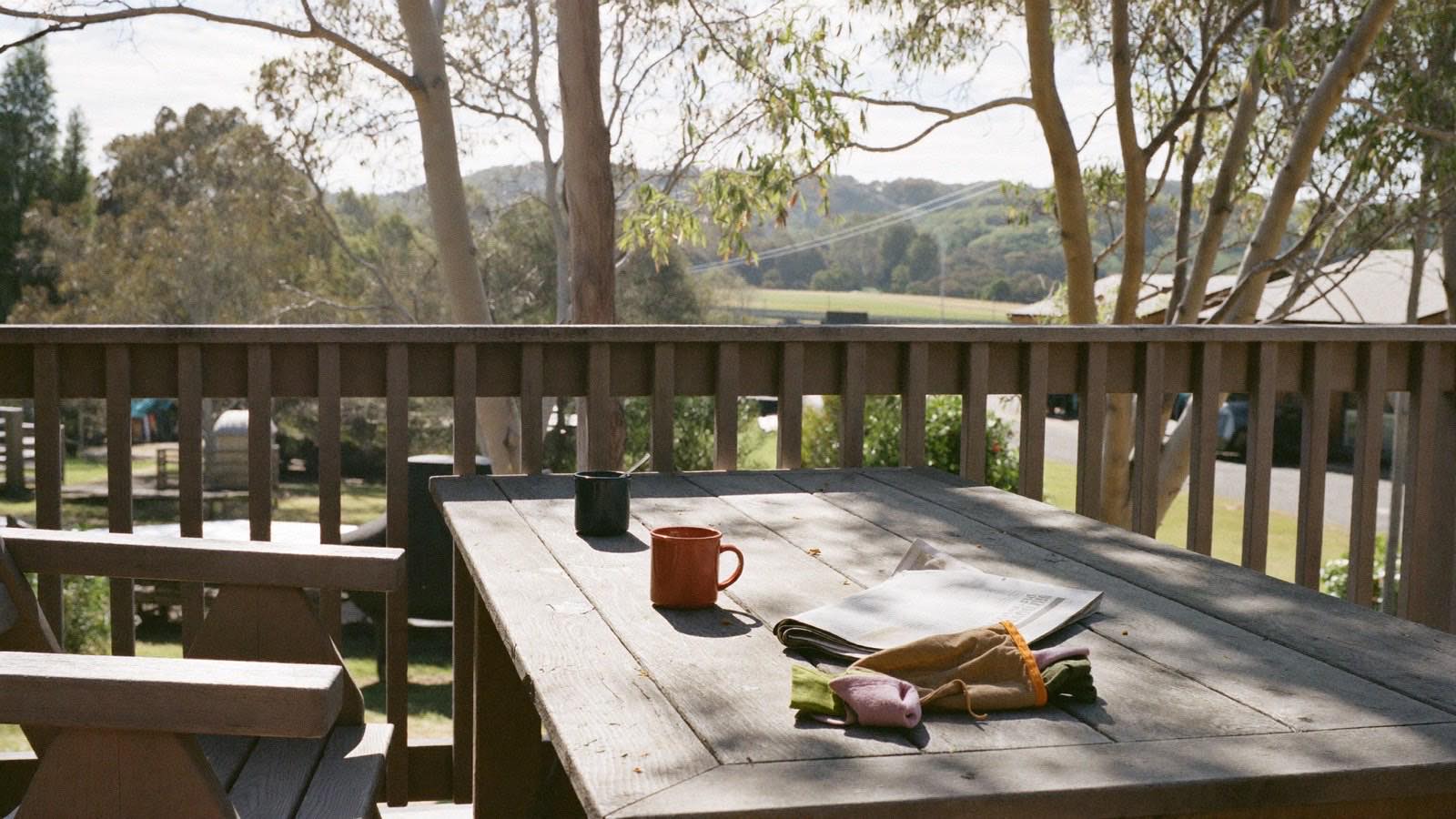
What a Saturday Looks Like in a Supported Home
Weekends in a supported home are quieter, later and less scheduled than weekdays. Here is how a Saturday usually runs and what to ask about it.
3 September, 2026 · 4 min read
Saturday is the day that tells you the most
If you can only visit a supported home once, visit on a Saturday. Weekdays are structured by things outside the house: day programs, appointments, work, transport that runs to a timetable. Saturday is the house being itself.
It is also the day families ask about least, which is odd, because it is roughly a hundred days a year. What follows is how a weekend day typically runs in a shared supported home. It is a general picture rather than a description of any one household.
The morning is later, and that is deliberate
In most supported homes the weekday morning is a timed operation: showers in an order, breakfast against a clock, transport at a fixed hour. Saturday drops most of that. People get up when they get up, and the shower roster spreads across a few hours instead of ninety minutes.
Staffing usually reflects it. Weekend mornings often run with the same worker for a longer block rather than a tight handover, because there is no transport run to hit. Breakfast becomes something people do rather than something that is served: toast at different times, someone cooking eggs, tea made three separate times. Less efficient, much more like a house.
Worth asking on a visit: is the weekend wake-up time genuinely the person's, or just a later fixed time for everybody? The difference shows up in whether a person can sleep in on the one day they might want to.
The middle of the day splits the house
This is the part that varies most. A typical Saturday afternoon in a shared home has people doing three or four different things at once, and the staffing has to cover all of them.
Someone is out: shopping, a football match, a swim, a haircut. Community access hours are often weighted toward the weekend, and it is worth checking whether they actually are in the plan you are looking at. Someone else is home and wants the house quiet, which a good home protects rather than treats as a problem. Someone has family arriving, and the detail that matters there is how easy that is to arrange, not whether it is allowed in principle.
And something domestic happens: the weekly shop, laundry that got away during the week, a bit of yard work. Some houses treat these as chores to be got through and some treat them as the actual support goal, which is the difference our piece on promoting independence for an adult with disability gets into.
Saturday night is where houses differ most
Some supported homes are functionally the same at 8pm on a Saturday as at 8pm on a Tuesday. Some are not, and the difference is usually about whether the house can support somebody being out late.
The constraints are real. If the overnight arrangement is a sleepover, a worker is going to bed at a certain point, and a resident arriving home at midnight needs somebody awake to help them. If a house has three residents and one worker on, one person going out at 7pm affects what the other two can do. That does not make late nights impossible. It makes them a planning question. Our explainer on overnight support in a shared home covers who is awake and when.
The other Saturday-night detail worth asking about is food. A shared dinner everybody eats at 6pm suits some households and quietly rules out other things.
What to ask if you are looking at a home
Ask what last Saturday actually looked like, not what Saturdays are like in general. The specific answer is more revealing and much harder to make up.
Ask how many staff are on across the weekend compared with a weekday, and whether the same workers do those shifts. Continuity matters more on the unstructured days, because the worker is making judgement calls rather than following a timetable.
Ask what happens when two people want to go different places at the same time on a Saturday afternoon. Every shared home hits this, and how a provider answers tells you how it thinks. Then ask about Sunday separately, particularly where residents attend a church or a mosque. Our guide to preparing for a first home visit has the rest of the visit questions.
Frequently asked questions
Is there less staff on at the weekend in a supported home?
Not necessarily less, but arranged differently. Weekday staffing is built around transport times and day programs, so it clusters into peaks. Weekend staffing tends toward longer, steadier blocks with fewer handovers, because the day is less timetabled. What matters is whether the hours match what people actually want to do on a Saturday, which is why community access hours are worth checking specifically.
Can someone stay out late on a Saturday night?
Usually yes, with notice. The constraints are practical rather than about permission: if the overnight arrangement is a sleepover, somebody needs to be available when the person gets home, and other residents have their own supports running. Ask how much notice a late night needs, and what happens with a spontaneous invitation.
Do residents have to eat together?
In a well-run shared home, no. A shared meal is offered rather than required, and people can eat earlier, later, separately or out. It is worth asking directly, because a fixed 6pm dinner for everybody is common and it quietly limits what a person can do with an evening. The answer also tells you how much of the house's routine is built around staffing convenience.
What is the best day to visit a supported home?
A Saturday, if the household agrees to it. Weekday visits show you the house at its most organised, running to external timetables. A weekend visit shows how the house behaves when nothing is imposing structure on it, which is closer to what daily life will feel like. Arrange it with the provider and the residents rather than dropping in, since it is their home.
Want to talk this through for your situation?
More from the blog.
-
What to Check About the Street Before You Move In
Most of the decision is outside the house. Footpaths, bus stops, the shops you can reach alone: what to walk and check before you accept a room.
Read article -
Visiting a SIL Home: Questions for the Staff
The most useful answers on a home visit come from the workers on shift, not the person showing you around. Here is what to ask them and what to watch for.
Read article -

Sleepover Shifts: What the Arrangement Covers
A sleepover buys a worker asleep on site and available, not a worker awake all night. What it covers, and what a disturbed night changes.
Read article
Let's find your place.
Speak with our team about vacancies, supports or day programs.