What to Check About the Street Before You Move In
Most of the decision is outside the house. Footpaths, bus stops, the shops you can reach alone: what to walk and check before you accept a room.
1 September, 2026 · 4 min read
Walk the block before you tour the house
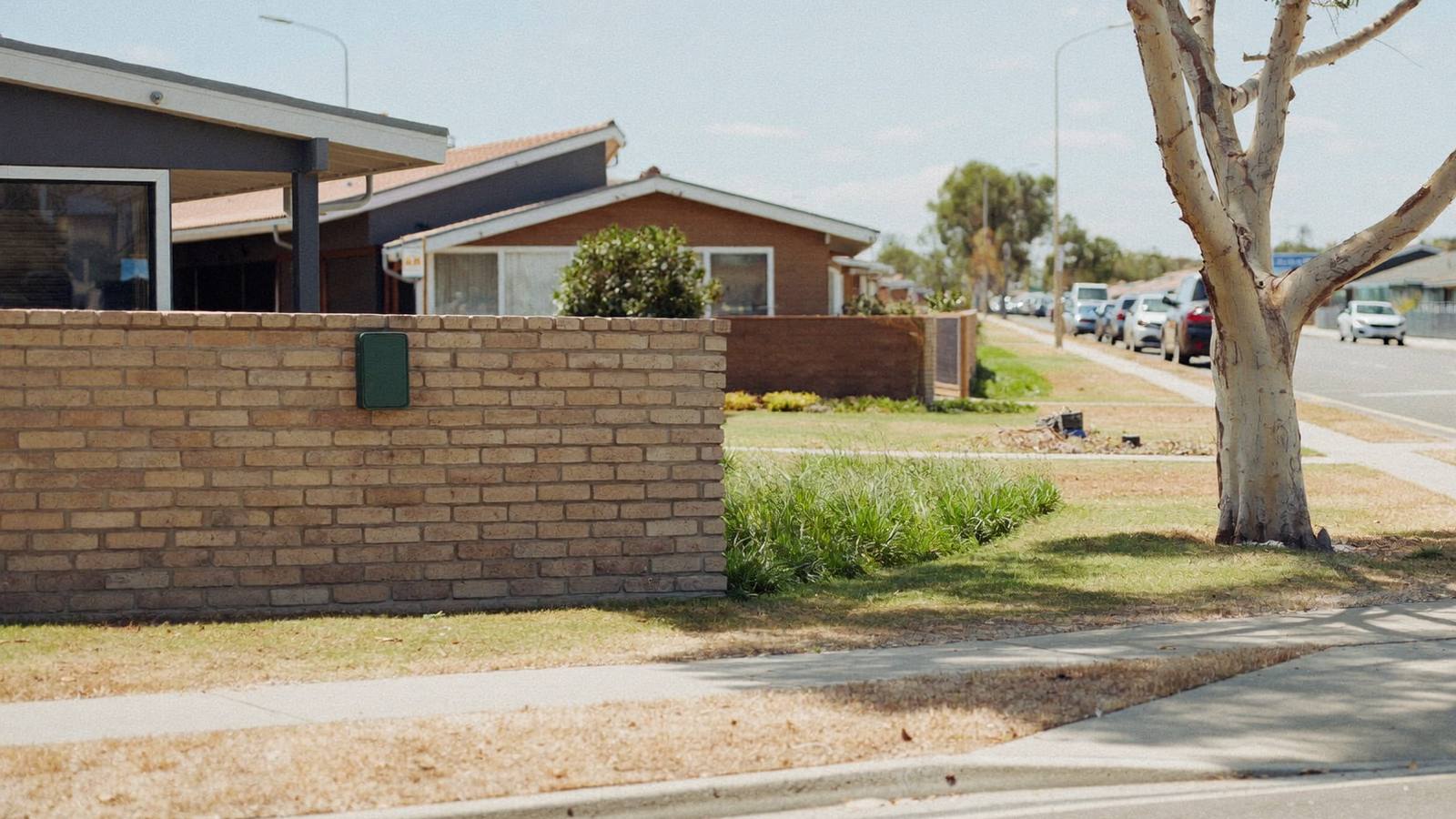
Give the street twenty minutes before you give the house an hour. A bedroom can be repainted and a wardrobe replaced; a suburb with no footpath on one side and the nearest bus stop eight hundred metres away is fixed for as long as somebody lives there.
Families most often discover this afterwards, in the first fortnight, when the plan to walk to the shops turns out to involve crossing a road nobody wants to cross.
The five-minute radius decides how independent the week feels
Stand at the front gate and work out what can be reached alone, on foot or by wheelchair, in five to ten minutes. A milk bar, a chemist, a park, a bus stop, a friend's place. Every one of those is an errand that can be done without booking a support worker or asking for a lift, and each one is a small piece of independence that gets used weekly for years.
Then check the same distance for the things that need a car anyway: the big supermarket, the hospital, the specialist. Those trips are going to be planned regardless, so being ten minutes further from them costs much less than being ten minutes further from the corner shop.
Footpaths, kerbs and the actual surface
Walk the route, do not look at it on a map. Check whether the footpath runs continuously or gives out halfway down the block, whether there are kerb ramps at both ends of each crossing rather than only one, and what the surface is like: old concrete lifted by tree roots is a genuine obstacle for a walking frame or a wheelchair.
Newer suburbs are often easier here because the whole estate was built to one standard at one time. Jordan Springs is a good example of that, with wide streets and consistent footpaths across the suburb. Older areas can be better connected and worse underfoot at the same time. What changes in a newer suburb goes through that trade-off in more detail.
Public transport: distance, not just presence
"Close to transport" means nothing without a number. Our Bexley home is about 1.4km from Bexley North station on the T8 line, with buses along Forest Road; the Jordan Springs home has no station nearby at all, with Penrith about 4.4km away and routes 673 and 783 running through the suburb. Both are workable. They produce completely different weeks.
Ask which stop, how far, how often the service runs, and whether the stop has a seat and a shelter. A twenty-minute wait in western Sydney heat with nowhere to sit is the difference between a bus route somebody uses and one they do not. If travel training is a goal, the route needs to be one a person can learn and repeat: learning the T8 line as a life skill shows what that looks like in practice.
Go back at a different hour
Visit once on a weekday morning and once on a weekend evening if you can. Streets change character. A quiet road at 10am can sit on a rat run at 5pm, and a house that backs onto a park can be lively on Saturday night in a way nobody mentions on a Tuesday tour.
Look for the small signals: people out walking, neighbouring yards kept, lighting between the house and the bus stop. None of these are on any listing, and together they tell you more about daily life there than the floor plan does. When you get to the house itself, the questions worth asking the staff on shift pick up where this leaves off.
Frequently asked questions
How far is too far from a train station?
There is no fixed answer, because it depends on whether the person travels independently and how good the bus connection is. As a rule of thumb, anything beyond about a kilometre stops being a walk and becomes a bus trip or a lift, so plan for that rather than assuming a walk. What matters most is whether the route is safe, shaded and learnable.
Should I choose a newer suburb or an established one?
Newer estates usually have consistent footpaths, wide streets and predictable kerb ramps, which helps anyone using a wheelchair or a frame. Established suburbs often have more services within walking distance and better train access, but the footpaths can be uneven. The right answer depends on how the person actually gets around day to day.
Can I ask to visit the street without touring the house?
Yes, and it is a reasonable thing to do. The street is public, so you can walk it any time without arranging anything. Doing that before a formal tour means you arrive with real questions about transport and access rather than forming an impression of the whole area in the ten minutes after the tour finishes.
What should I check about lighting and safety?
Walk the route between the house and the nearest bus stop or shops after dark if you can. Look for working street lights, footpaths that are not blocked by parked cars, and crossings that are lit. If somebody will be coming home from a day program or a job in winter, that walk happens in the dark for several months of the year.
Want to talk this through for your situation?
More from the blog.
-

Living in Macarthur with an NDIS Plan: An Area Guide
Campbelltown, Narellan, Macquarie Fields and Camden from a participant's point of view: hospitals, transport, learning and where the homes actually sit.
Read article -
Keeping Faith and Community Life After a Move
A move can quietly end a weekly practice nobody wrote down. Name the day, the travel and the timing before the move, not after the first one is missed.
Read article -
What a High Physical Support SDA Home Includes
High Physical Support is the SDA design category built for very high support needs. Here is what that means room by room, and what it does not cover.
Read article
Let's find your place.
Speak with our team about vacancies, supports or day programs.