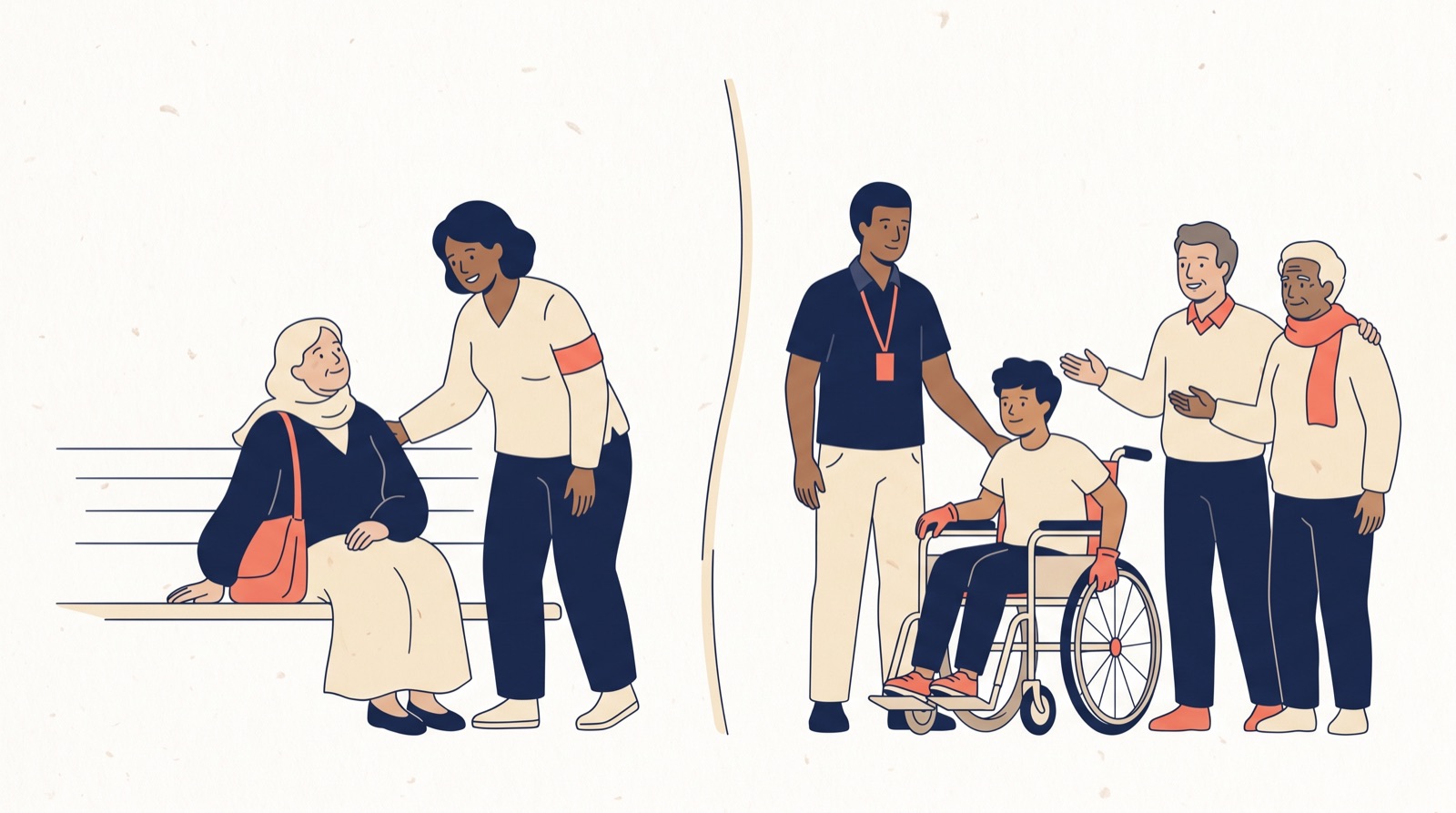
One to One or a Group: What Ratios Change
1:1, 1:2 and 1:3 are quoted constantly and explained rarely. What each ratio changes about the hour, the cost and who the support suits.
4 September, 2026 · 6 min read
What the numbers mean
A ratio is workers to participants. One to one means a worker is with you and nobody else for that hour. One to two means the same worker is supporting you and one other person at the same time. One to three, and so on.
The rate per hour falls as the ratio widens, because the worker's cost is shared. That is the entire financial logic, and it is why a plan with a fixed number of dollars buys noticeably more hours in a group than one to one. The NDIS Pricing Arrangements and Price Limits set the rate for each ratio, and it is republished by the NDIA, so any figure quoted to you should be traceable to the current version.
The trap is treating the ratio as a price decision. It is a support decision that has a price attached, and those two things pull in opposite directions.
What changes inside the hour
At one to one, the hour follows you. If you want to leave the shops after twenty minutes, you leave. If the swim takes longer today, it takes longer. The worker's attention does not have to be rationed, which matters most for personal care, for anything with a safety risk, and for anyone who needs prompting rather than doing.
At one to two or one to three, the hour follows the group. Everyone arrives together and leaves together, the destination is a compromise, and the worker is dividing attention by design. For some people that is a downgrade. For others it is the point, because a support that comes with other people in it is the only regular social contact in the week.
The honest version of the trade-off: a group ratio is not one to one with less attention. It is a different activity.
Where a group ratio is genuinely better
Community access is the clearest case. A trip to the pool, a bowling group, a walking group: the presence of other participants is not a compromise, it is the reason to go. Paying one to one for an activity whose value is other people is spending more for less.
Skill building sometimes works better in a group too. Cooking a meal with two other people involves turn taking, negotiating and waiting, which is closer to real life than being taught alone.
And there is the arithmetic, which nobody should apologise for. If a plan buys four group hours or two solo hours, four hours of the right activity is usually more life than two. Our piece on making an NDIS budget last covers where that swap is worth making.
Where one to one is the only answer
Personal care, almost always. A shower, a transfer or continence support is not a shared task, and a ratio that suggests otherwise is a warning sign rather than a saving.
Anything with a manual handling or safety risk, where a worker needs both hands and full attention on one person. Anything covered by a behaviour support plan that specifies a level of supervision. And any support where the whole purpose is a person learning to do something themselves, which needs a worker watching and stepping back at the right moment rather than managing a group.
There is also a quieter case: a person who finds other people exhausting. Putting them in a group to stretch the budget produces hours that get cancelled, and cancelled hours help nobody. Our explanation of how support hours are worked out covers how shared and individual time sit together in a supported home.
How the ratio gets decided
Two ways, and it is worth knowing which one applies to you. In a shared home, the ratio comes out of the roster of care, which is built around the whole household rather than around you individually. In community or in-home supports, it is usually set activity by activity when the support is arranged.
Either way, a provider should be able to tell you the ratio for each block of support before you agree to it, and it should appear on the invoice. If you cannot tell from a statement whether an hour was shared, ask for it to be itemised. Our guide to what in-home care actually costs covers reading a provider statement line by line.
One thing to check specifically: whether a group support was actually delivered at the ratio it was claimed at. A one to three that ran as a one to two because someone did not turn up is a billing question, and a reasonable provider will correct it without an argument.
How to change a ratio that is not working
Start with the activity, not the funding. Write down what is going wrong: hours cut short, a person coming home unsettled, a skill that has stopped progressing, a support that gets cancelled. That description is the case.
Then ask the provider what a different ratio would look like in practice, including whether they have the staff to deliver it. A ratio change that a provider cannot roster is a conversation, not a solution.
If the change needs more funding rather than the same funding used differently, that is a plan variation, decided by the NDIA on the evidence in front of them. A provider cannot promise the outcome, but it can put the operational reality in writing, which is the part planners rarely get to see.
Want to talk this through for your situation?
More from the blog.
-

NDIS Home Modifications: From OT Report to Ramp
Home modifications are Capital supports and they follow a set order: OT assessment, quotes, NDIA decision, build. Here is each step and its timing.
Read article -
Overnight NDIS Support: Active vs Passive
A sleepover means a worker stays the night and sleeps. Active overnight means a worker is awake and working. They are priced differently, so the choice matters.
Read article -

Sleepover Shifts: What the Arrangement Covers
A sleepover buys a worker asleep on site and available, not a worker awake all night. What it covers, and what a disturbed night changes.
Read article
Let's find your place.
Speak with our team about vacancies, supports or day programs.