A Shared House or Your Own Unit With Support?
Same funding, different building. A shared house puts support in the hallway; a self-contained unit brings it to your door. What each one actually changes.
8 September, 2026 · 7 min read
Two different questions, often confused
This is not the question of whether you want housemates. That one is about people, and we have written about it in SIL shared or solo.
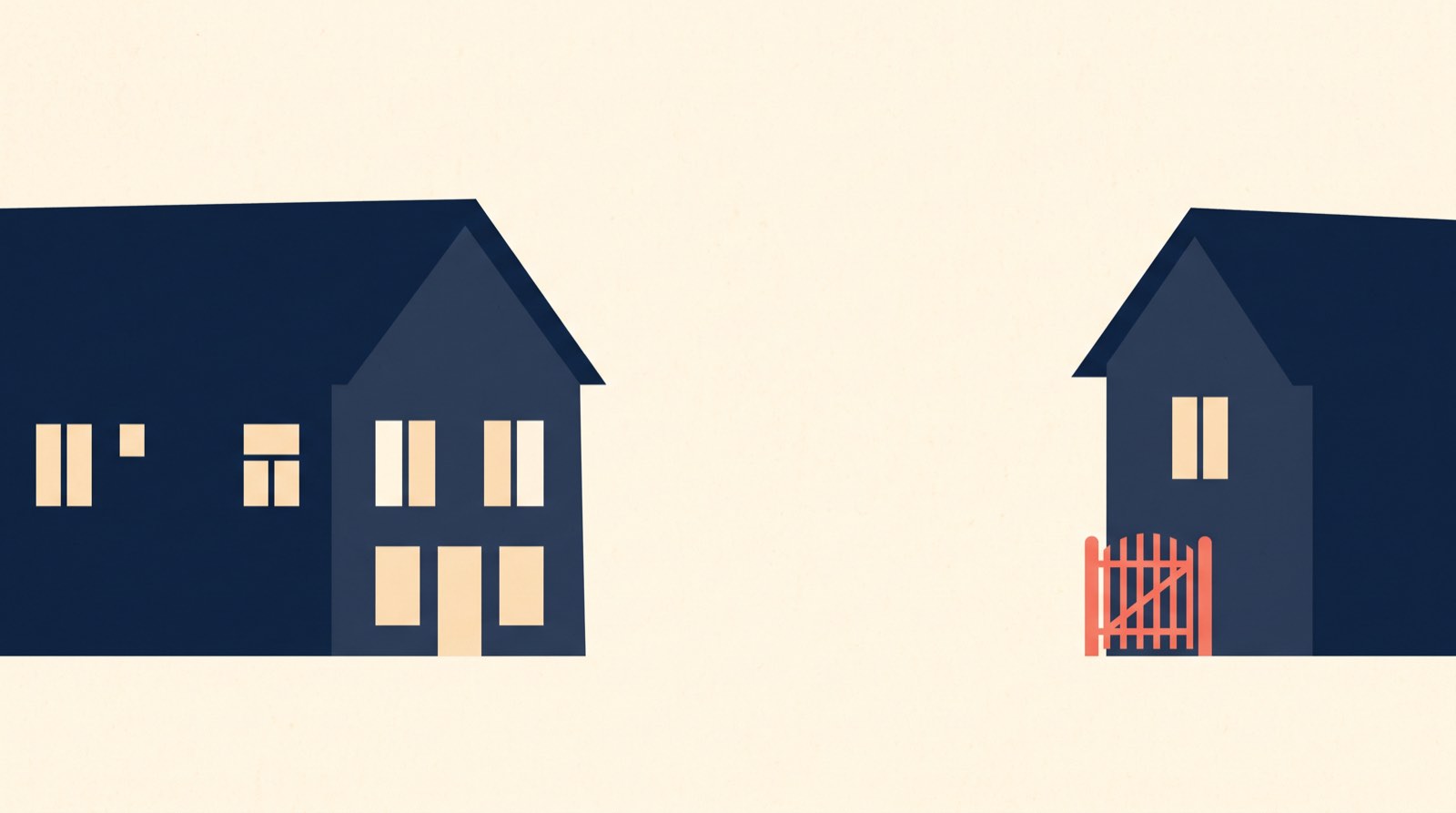
This is the question about the building. A shared house means one front door, a shared kitchen, shared living areas and bedrooms off a hallway, with support staffed on site. A self-contained unit means your own front door, your own kitchen and bathroom, and support that arrives at agreed times or is available from nearby.
You can be lonely in a shared house and you can be well connected in a unit. The building does not decide that. What the building decides is how support reaches you, and that is a practical difference with real consequences.
How support arrives
In a shared house, support is present. Somebody is in the building, and if the kettle boils dry or a shower goes wrong at seven in the morning, the response is measured in seconds. That presence is the product.
In a unit, support is scheduled. It comes at eight and again at five, or in a cluster arrangement a worker is on site in the building but not in your flat. Between those times you are on your own, which is either the whole point or the risk, depending on the person.
The most useful way to test which you need is to ask what happens between the shifts, hour by hour, on an ordinary Wednesday, and then ask the same for a bad Wednesday.
What changes at two in the morning
Night cover is where the two shapes diverge most, and it is the single question that decides this for many households.
A shared house spreads overnight cover across everyone in it. One worker asleep on a sleepover arrangement, or awake on an active night shift, covers the house. In a unit, overnight cover is yours alone unless the building has a cluster arrangement or an on-call worker nearby.
The structural point is simple: a support that is shared costs each person less than the same support delivered to one person, because the hours are divided. That arithmetic sits under most conversations about SIL funding, and it is set out in the NDIS Pricing Arrangements and Price Limits rather than being a provider's choice. Funding decisions still sit with the NDIA and turn on evidence of what you need overnight, not on which building you prefer.
If nights are the crux, our comparison of overnight support at home against a move to supported accommodation goes into it properly.
Daily life, honestly
The kitchen. In a shared house it is a negotiated space with a roster and other people's habits in it. In a unit it is yours, which means both freedom and the fact that if nobody prompts you, dinner might not happen.
Noise and unpredictability. A shared house has other residents' hard days in it, and you cannot opt out of them. For someone who finds other people's distress overwhelming, this is decisive.
Company. A unit can be very quiet. Where a person has few natural visitors, hours of community access do not fill an evening the way a housemate in the next room does.
Control. Your own front door means deciding who comes in and when. That is the reason most people who want a unit want one, and it should not be treated as a small thing.
Where the funding streams sit
Both shapes can be Supported Independent Living, because SIL pays for the support rather than the bricks. A unit can also be an Individualised Living Option, which funds an arrangement rather than a rostered service, and either shape can be a Specialist Disability Accommodation dwelling if the person is eligible for SDA on the basis of extreme functional impairment or very high support needs.
That matters because the words get used loosely. "Own unit" sometimes means an SDA apartment with on-site concierge support, sometimes a granny flat behind a family home, and sometimes a private rental with in-home care coming in. The funding, the security of tenure and the exit rights are different in each.
Our overview of SIL, SDA, ILO, MTA and STA sets the streams side by side, and it is worth reading before touring anything, because it changes the questions you ask.
Who each one tends to suit
A shared house tends to suit someone who needs support available rather than scheduled, who is at risk when alone for long stretches, who has overnight needs that would be expensive to fund alone, or who is genuinely better off with people around.
A unit tends to suit someone whose support needs are predictable and can be scheduled, who manages well alone between visits, who finds shared living harder than living alone, or who has a strong existing network that keeps the flat from becoming isolating.
Plenty of people sit between the two, and the honest answer for them is often a shared house now and a unit in two years, in that order, because it is much easier to move from more support to less than the reverse.
How to test it rather than guess
Trial the shape, not just the property. A few nights in a shared house tells you whether other people's evenings are tolerable. A fortnight in a self-contained space, with the actual shift pattern being proposed, tells you what the gaps feel like.
Ask what the exit looks like from each, in writing, before you sign anything. Ask what happens if the arrangement is wrong after six months.
And ask the person who will live there which one they picture when they think about a Sunday afternoon. They usually know.
Frequently asked questions
Can SIL funding be used in your own unit?
Yes. SIL funds the support, not the housing, so it can be delivered in a shared house or in a self-contained unit. What changes is the cost and the shape of the roster, because support that is shared across a house is divided between the residents while support to one person is not. Funding decisions sit with the NDIA and turn on evidence of your assessed support needs, so the practical question is what level of support you need and when, rather than which building you prefer.
What is the difference between SIL in a unit and an ILO?
SIL funds a rostered support service. An Individualised Living Option funds a living arrangement, which might combine a host, informal supports and paid hours, and it is designed for people who want to build something less standard. Both can happen in a unit. The main practical differences are how the funding is structured, how much of the arrangement you assemble yourself, and how the plan describes it.
Is a shared house always cheaper?
The support usually costs the plan less per person because overnight and downtime cover is shared, and that is the arithmetic behind most SIL quotes. Rent and household costs are separate and depend on the property. Cheaper is not the same as right, though, and a shared home that does not suit someone is an expensive outcome in every other sense.
Want to talk this through for your situation?
More from the blog.
-

SIL vs ILO: Which NDIS Living Support Fits Your Life?
SIL staffs a shared home. ILO builds a support arrangement around where you choose to live. The difference is who the support is organised around.
Read article -

NDIS Housing Options Explained: SIL, SDA, ILO, MTA and STA
Five funded ways to put a roof and support together, what each one actually covers, and how to work out which combination fits your life.
Read article -

Reasonable and Necessary, in Plain English
Six criteria decide whether the NDIS funds a support. Here is what each one asks, in plain terms, and what evidence answers it.
Read article
Let's find your place.
Speak with our team about vacancies, supports or day programs.