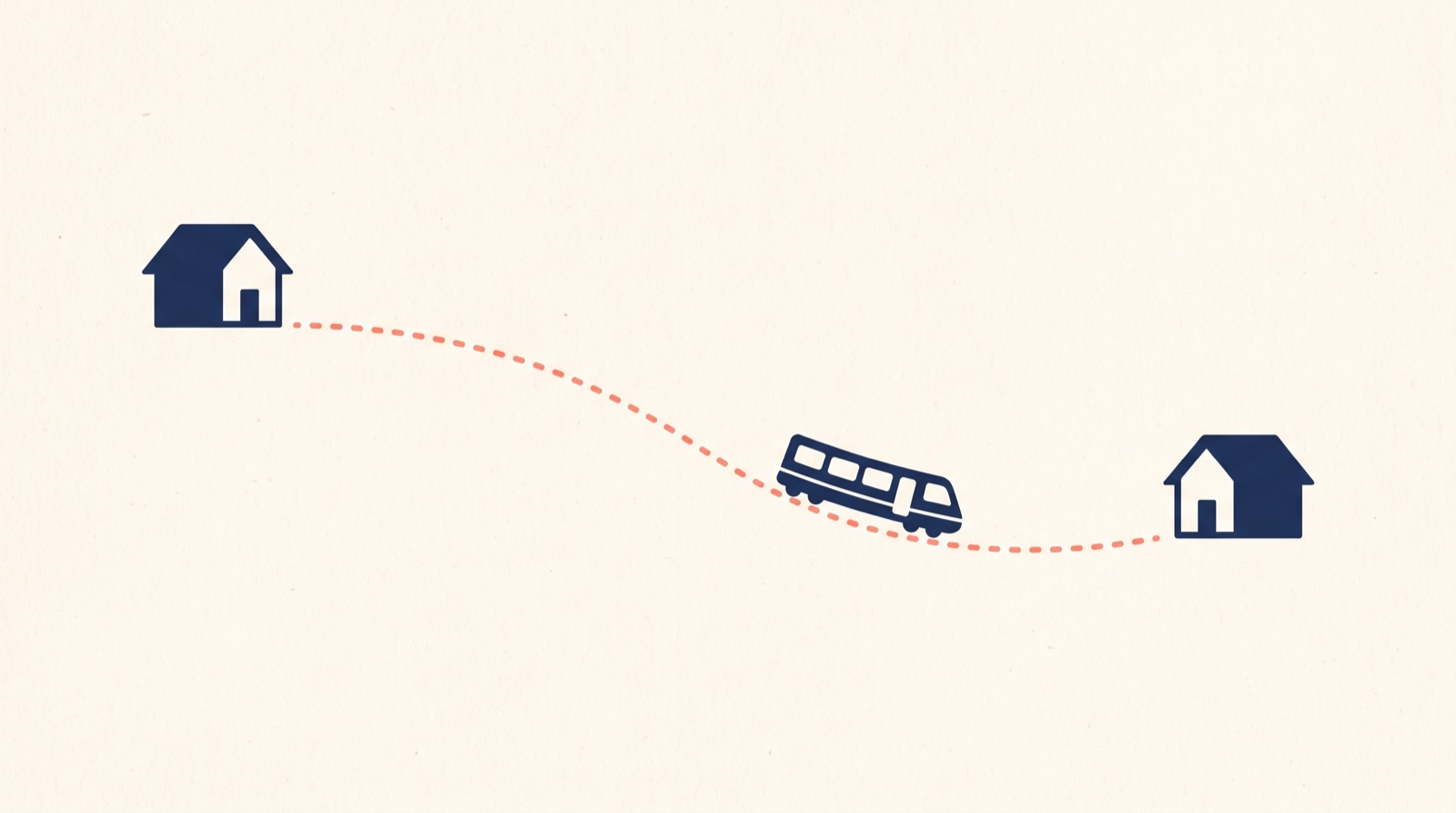
Train Travel Training on the T8 Line
Travel training is one route, repeated until it is boring. The T8 links Bexley North, Macquarie Fields and Campbelltown, which makes it a good teacher.
22 August, 2026 · 4 min read
One line, one route, repeated until it is dull
Travel training is not a course. It is the same trip, done over and over with a support worker who steps back a little each time, until the person can do it without thinking. The skill being built is not catching a train. It is handling the day the train does not come.
The T8 line happens to be a good teacher for our part of Sydney. It runs from the city through Bexley North, then south west through Glenfield, Macquarie Fields, Ingleburn, Minto and Leumeah to Campbelltown and Macarthur. Three of our homes sit near it, which means the same route can serve a person living in Bexley and a person living in Macquarie Fields, and the two of them can end up meeting for a coffee halfway without either needing a lift.
The stages, roughly
Most travel training follows the same shape. Stage one, the worker does everything and the person watches: buying the fare, reading the indicator board, choosing the carriage. Stage two, the person does it with the worker beside them, prompting. Stage three, the worker travels in the same carriage but says nothing. Stage four, the worker is on the same train, a carriage away. Stage five, the worker meets them at the other end. Stage six, nobody meets them.
Good travel training spends the most time on stages three and four, which is where confidence is actually built, and the least on stage one. The common mistake is rushing to independence because it looks like progress, then having one bad trip undo six months.
Build the contingency in early rather than at the end. What do you do if the train is cancelled. What do you do if you get off at the wrong station. Who do you call, and is that number saved and easy to reach on the phone you actually carry. Practise the wrong-station scenario on purpose, on a quiet weekday, with the worker there. It is far better to have already done it once.
The practical checks nobody thinks of first
Check the stations, not just the line. Access varies a lot between stations on the same route, and a station with stairs only is a different trip from one with lifts. The Transport for NSW trip planner flags which stations have lift access, and it is worth checking both ends of the trip and the interchange before you build a routine around it.
Check the time of day. A 7.30am platform and an 11am platform are different environments, and someone who manages the quiet version can be overwhelmed by the crowded one. Train at the time the real trip will happen.
Check the fare. Many participants receiving the Disability Support Pension hold a concession entitlement, and the concession is worth sorting out before training starts rather than mid-trip at a machine. Sort the card, load it, and practise topping it up as part of the training, because a flat card is the most common reason an otherwise confident traveller gets stuck.
Where the funding usually sits
Travel training is capacity building. It is teaching a skill, which puts it in a different part of your plan from transport funding, which pays for getting places you cannot get to independently. The two are often confused, and our article on NDIS transport funding sets out the difference.
That distinction has a practical edge. Transport funding is ongoing. Travel training is meant to end, and a well-run programme reduces the transport support a person needs afterwards. That is exactly the argument to make when asking for it, because it is the argument the NDIA finds easiest to accept.
Frequently asked questions
How long does travel training usually take?
It varies enormously, from a few weeks for a familiar short trip to a year or more for someone learning a new route with an interchange. The honest answer is that it depends on how much of the skill is route memory and how much is coping with disruption. Trainers who quote a fixed number of sessions before meeting the person are guessing.
Is travel training funded by the NDIS?
It is generally treated as a capacity building support, because it builds a skill rather than paying for a trip. How it appears depends on how your plan is written. Ask your support coordinator or plan manager to confirm which budget it would come from before you book anything, and get the provider to quote against that line.
What if the person cannot travel independently at the end?
That is a normal result, not a failure. Plenty of people finish travel training able to do one specific route in daylight and not others, and that single route can still be the difference between attending a day program and not. Partial independence is a real outcome and should be recorded as one.
Which stations on the T8 line have lift access?
It differs station by station, and upgrades happen over time, so check the Transport for NSW trip planner rather than relying on a list. Check both ends of the intended trip and any interchange. If a station on the planned route has no lift, the training route can usually be redesigned around it rather than abandoned.
Want to talk this through for your situation?
More from the blog.
-
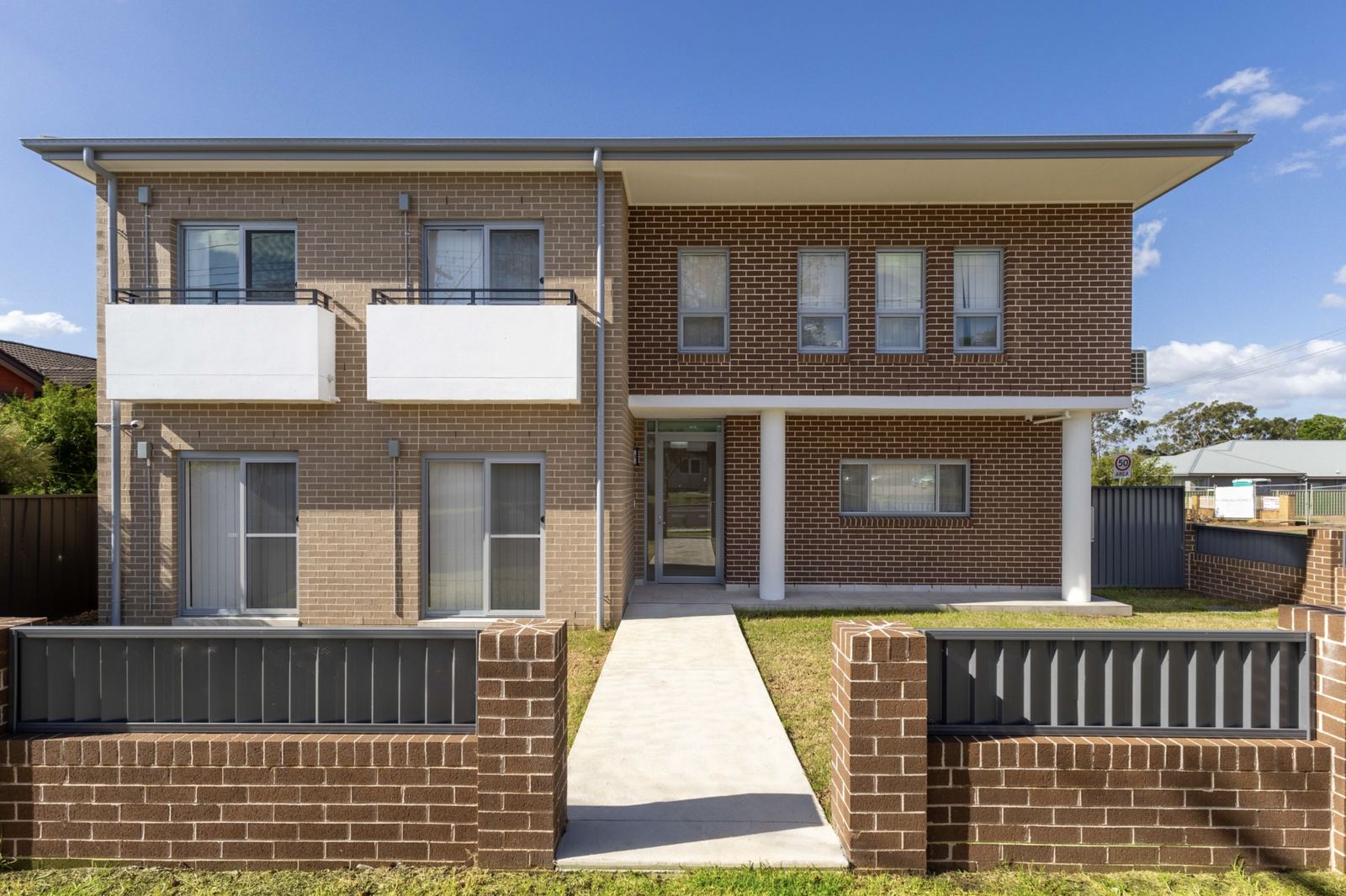
SIL in Macquarie Fields: Studio Living with a Station Next Door
Private studio living, tailored on-site support, and a train station in the suburb itself. A local look at our Macquarie Fields SIL home.
Read article -

Supported Independent Living in Goulburn: Regional Life, Real Support
A slower pace, shorter distances and a community that knows each other. What SIL looks like in our Goulburn home in the Southern Tablelands.
Read article -

SIL Handbook Part 4: The First 90 Days
Moving in is not the finish line. The first three months are when the roster, the household and the routine get built, and when most fixable problems appear.
Read article
Let's find your place.
Speak with our team about vacancies, supports or day programs.